How Indoor Allergens Can Cause Skin Irritation
- posted: Dec. 29, 2025
The interior areas can be regarded as safe places where harsh weather, pollution and outdoor allergens are not dangerous anymore. However, in the case of most individuals the actual causes of recurring rashes, itching or other unexplainable skin irritations lie within their own homesteads. Dust mites, pet dander, mould, perfumes, and household chemicals all can trigger uncomfortable reactions and particularly those with sensitive skin, eczema or an underlying allergy.
Understanding the impacts of indoor allergens on your skin will assist you in avoiding flare-ups, taking care of your skin barrier, and understanding when you need to consult a professional. At Heights Dermatology, we assist patients to discover the hidden causes of irritation and offer them holistic remedies to maintain a healthy skin throughout the year.
This guide will break down the usual indoor allergens, their impact on your skin and the most effective methods of regaining comfort and avoiding long term problems.
What Are Indoor Allergens?
Microscopic particles in the home, place of work and shared environments are known as indoor allergens. The allergens are present in beddings, carpets, sofas, HVAC systems, as well as personal care products. Although this might seem not harmful, it may cause an immune response causing itching, redness, swelling, or rashes that do not disappear.
The indoor allergens that are the most widespread are:
Dust mites
Small creatures that live in mattresses, upholstered pieces of furniture, and carpets. They are adapted to warm and humid climates.
Pet dander
It is not only fur but also dried skin flakes, saliva and proteins that may cause allergic reactions.
Mold and mildew
Found in bathrooms, basements and damp spots. Mold spores are capable of inducing respiratory and skin responses.
Home care products and perfumes.
The irritants found in scented candles, detergents, fabric softeners and cleaners tend to disrupt the skin barrier.
How Indoor Allergens Irritate the Skin.
Although you may not be allergic to it, indoor allergens may still irritate or inflame the skin. Here is how:
The Activation of the Immune System.
During allergens exposure to your skin, your immune system can regard them as enemies resulting in:
Redness
Swelling
Itching
Raised bumps or patches
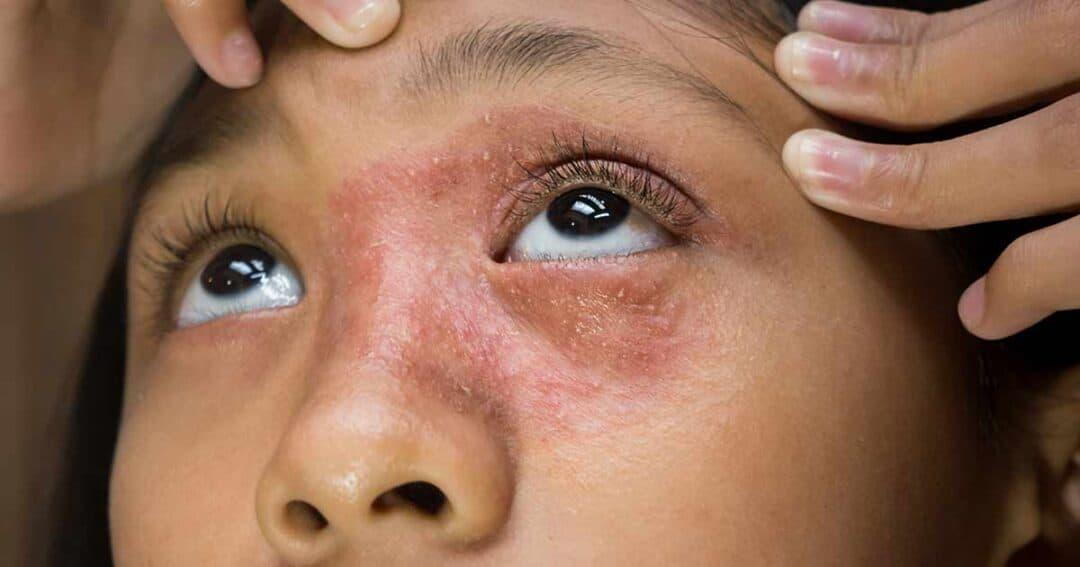
Such a response is referred to as contact dermatitis, a frequent cause of patients visiting a dermatologist.
Weakening the Skin Barrier
The natural protective layer of the skin can be broken by the indoor allergens. In instances of the breakdown of the skin barrier:
Moisture escapes
Irritants enter into the body more easily.
The skin becomes dry, flaky and becomes more reactive.
Those people who have eczema or sensitive skin tend to react intensively as a result of an already compromised barrier.
Causing chronic inflammation.
Persistent inflammation may result when there is long-term or repeated exposure of indoor allergens. You may notice:
Daily itching
Ongoing dryness
Red rashes that keep reoccurring in the same areas.
Other skin issues can be worsened by chronic inflammation which disrupts healing.
Signs you are Reacting to Indoor Allergens
Other causes of skin irritation do not necessarily include food or outdoor causes. You may be responding to something in your house in case you observe:
Itching that worsen at night (particularly dust mites in bedding)
Rashes that can happen to one after cleaning or laundry.
Flare-ups when you sit on some pieces of furniture.
Redness after using scented candles, air fresheners or perfumes.
After cuddling with pets, irritation occurs.
Some of the common spots of irritation are the neck, hands, eyelids, face, and inner arms.
How to Reduce Indoor Allergens Exposure.
The exposure to indoor allergens may be greatly decreased with the help of small changes and your skin will feel more comfortable.
Improve Air Quality
Install HEPA filters on the air purifiers and vacuum cleaners. They filter microscopic allergens that ordinary filters fail to filter.
Wash Bedding Frequently
Dust mites thrive in bedding. Wash bed sheets, pillow cases, and blankets every week in hot water.
Reduce Moisture and Mold
Keep the room dry by using a dehumidifier particularly in humid rooms. Wipe the damp surfaces as soon as possible and ensure that bathrooms are well ventilated.
Choose Hypoallergenic Products.
Switch to non-perfumed detergents, soaps, lotions and cleaners. Search for products with the labels for sensitive skin or hypoallergenic.
Manage Pet Dander
Clean the pets by brushing and bathing them, do not allow pets to sleep in your bed, and vacuum the house often.
Declutter and Dust Often
Allergens attach to fabrics and clutter. Removal of unnecessary things minimizes the accumulation of allergens.
Skin Conditions that Worsen from Indoor Allergens.
Indoor allergens do not affect all people equally, however, there are skin conditions that are particularly sensitive to allergens:
Eczema (Atopic Dermatitis)
One of the top triggers of eczema is indoor irritants. These may lead to severe itchiness as well as chronic dryness.
Contact Dermatitis
The rashes are usually red and itchy due to chemicals, fragrances and cleaning products.
Chronic Dry Skin
Loss of strength in the protective layer as a result of contact with allergens causes fissuring, drying out and inflammation.
Skin Infections
The skin can be broken because of constant scratching, and this process can lead to infection.
In case these symptoms do not go away, it is best to consult a specialized dermatologist so your skin can recover properly.
When Indoor Irritation is a Sign for a Serious Problem.
At Heights Dermatology, we do not just treat the daily skin irritation, but we also discover underlying conditions that patients themselves are not even aware that they are developing.
Permanent redness, new growths or patches that never heal may be confused with irritation but in fact are early skin conditions, particularly in patients who are at risk of skin cancer.
This is the reason why we focus on comprehensive skin assessment. Although the levels of indoor allergens usually irritate, such symptoms as scaling, inflammation, or non-healing spots may also be signs of:
Basal cell carcinoma
Squamous cell carcinoma
Precancerous lesions
When anything on your skin changes, spreads or fails to heal, you need to have a dermatology examination.
Our team specializes in:
Skin cancer treatment
Skin cancer surgery
The gold standard for exact removal skin (Mohs surgery).
Skin cancer therapy includes advanced treatment for early, complex cases.
You are our priority and you can trust your skin with our hands, be it allergens or more serious conditions.
Professional Skin Care Solutions at Heights Dermatology in Houston
In case of persistent discomfort due to indoor allergens, our dermatological specialists can assist in providing:
Patch testing to determine particular irritants.
Medical treatment for dermatitis, eczema, and persistent irritation.
Individualized skincare recommendations.
Advanced treatment for complex or persistent symptoms.
Our professionals go to the extent of learning about your home environment, symptoms and skin requirements to develop a plan that will provide relief and permanent change.
Take Control of Your Skin Health.
When the skin is reacting to the indoor allergens, or you are not sure that irritation can be something bigger, Heights Dermatology is at your service.
Our services extend from daily treatment for skin irritation to complex skin cancer surgery, Mohs surgery for skin cancer and skin cancer treatment in Houston.
Waiting until the symptoms become severe is not a good idea. Schedule your appointment with Heights Dermatology in Houston and protect your own skin both inside and outside.