What are the 7 Warning Signs of Skin Cancer?
- posted: Nov. 12, 2025
The largest organ of your body is your skin and it usually tells you something about your health. From discoloration or new growths to freckles and moles, it is important to pay attention to changes in your skin.
Skin cancer is not only one of the most widespread types of cancer, but also one of the most treatable ones provided it is detected early. When early signs are identified this could make the difference between a successful outcome or failure.
Heights Dermatology in Houston offers advanced skin cancer treatment, skin cancer surgery, and Mohs surgery as a skin cancer treatment, guaranteeing the patients receive quality, expert, and compassionate care. We will discuss the 7 red flags of skin cancer, which cannot be overlooked, and how professional skin cancer treatment would keep you healthy and confident.
A Mole or New Growth that Looks Different.
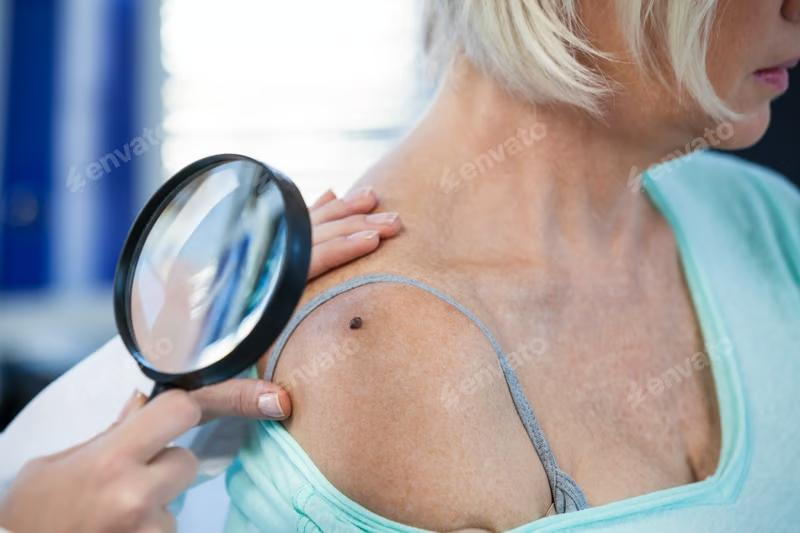
The majority of moles are benign and appear at an early age of childhood or youthful adulthood. But when a new mole or a skin growth suddenly pops up, particularly, when it appears different, to your other moles, then it is time to make a closer examination.
A suspicious mole can either possess an irregular border, uneven color or appear bigger than a pencil eraser. Dermatologists usually rely on the ABCDE rule that allows identifying concerning changes:
Asymmetry- One half does not resemble the other.
Border - Edges are irregular, ragged or blurred.
Color - The color is different across the mole (brown, black, red, white or blue).
Diameter - The spot is bigger than 6mm (approximately the size of a pencil eraser).
Evolving - It is something that overtime changes its color, shape or size
Although a mole might not fit all these specifications, it is still advisable to have it examined by a dermatologist trained in skin cancer treatment.
A Sore That Does Not Heal
One of the earliest signs of the basal cell carcinoma or squamous cell carcinoma, two of the most prevalent types of skin cancer , is a sore that fails to heal within a few weeks.
Such types usually begin as little red patches, scabs, or open sores which might easily bleed or form a crust. The sore may partially improve and open up again. Any unhealing wound or sore requires professional examination, the sooner skin cancer therapy is administered, the better, and prevents further tissue damage.
Redness or New Pigment Spreading Beyond a Mole.
Once you observe that the red color or darker pigmentation spreads out along the edge of a mole to the surrounding skin, that can be a melanoma symptom, which is the most aggressive form of skin cancer.
It is also possible that this symptom is accompanied with swelling or irritation around the mole. The melanoma may develop rapidly, and a pigment change, which seems to be abnormal, should be taken seriously. A dermatologist conducts a biopsy and determines if skin cancer surgery is necessary to remove the affected tissue.
Itching, Pain, or Tenderness
Most of the changes are painless in the skin but certain cancerous lesions may be painful. An early symptom of skin cancer can be a mole or a skin patch starting to itch, hurt or become sensitive.
Pain is nothing more than your body talking to you and telling you that something is wrong. Never overlook it, the slightest discomfort would be evidence of inflammation or swelling underneath the skin. By consulting a specialist for early diagnosis allows for precise skin cancer treatment and higher chances of full recovery.
Changes in Texture or Surface.
When the skin on your body begins to change in texture, such as by becoming scaly, crusty or lumpy, it is possible that you have some form of squamous cell carcinoma or other skin cancer. There are certain cancers that can be in the form of warts or raised,rough patches that do not disappear.
In some cases, skin cancer can appear shiny or waxy in the form of a pearl-like bump. Any abnormal changes of the surface, which does not disappear, must be examined, particularly when it is bleeding or scabby. These growths can be eliminated early in skin cancer treatment before they penetrate further in the skin.
Sudden Changes in Mole’s Colors.
Not all skin cancers appear dark brown or black, they may be pink, red, white, or even blue. A sudden change in color, or multiple shades in a mole is a strong warning sign.
This color variation occurs when melanocytes (pigment-producing cells) start to multiply uncontrollably. Dermatologists are able to examine these changes closely with dermoscopy and other imaging methods. In case skin cancer is diagnosed, the highest cure rate of many types of skin cancer is achieved through Mohs surgery for skin cancer which removes cancer layer by layer without affecting the healthy skin.
A Lump Under the Skin
In more advanced stages, skin cancer may develop hard lumps beneath the skin particularly in regions such as neck, armpits or groin. This can be an indication that the cancer has spread to the nearby lymph nodes.
In case of any new lumps or swelling which does not fade away, seek medical attention. Although not every lump is cancerous, early examination is useful in ruling out severe conditions and enabling early skin cancer therapy in case of its presence.
When to See a Dermatologist
There is no need to wait before the symptoms are severe. The most effective method of prevention against skin cancer is regular skin examinations (self-exam and professional screening).
Dermatologists suggest that an individual should do a monthly skin self-examination with good light and a mirror. Examine every part of your body, even the parts that you may not pay much attention to: top of your head, feet, between fingers and toes, and nails.
In case you notice any one of the seven warning signs or even something that just does not look right, schedule an appointment. At Heights Dermatology, our professionals team use the latest advanced tools to evaluate the suspicious lesions and offer individualized skin cancer treatment plans.
How Skin Cancer Is Treated
The treatment is determined by the type and stage in which the cancer is. When detected early, treatment nearly always ends in success. Common treatments include:
Skin Cancer Surgery - The lesion is removed along with the surrounding skin tissue to avoid recurrence.
Mohs Surgery For Skin Cancer - This is a surgical procedure that is very specific and involves removing the skin cancer in layers and leaving as much intact healthy skin as possible. This is a highly effective method for facial or recurring skin cancer.
Skin Cancer Therapy- Non-surgical therapy with topical medications, photodynamic therapy, immunotherapy or radiation based on the type and depth of cancer.
Our dermatologists will guide you through the entire procedure of how things happen; we will diagnose, and then the recovery process will be achieved with your comfort and safety.
Prevention Tips
Although certain risk factors such as the genetics or the skin type may be beyond change, there is much you can do to ensure that your risk is minimized:
Use broad-spectrum sunscreen with a SPF of 30 and above on a daily basis.
Tan beds and extended time in the sun are to be avoided.
Protective clothes, hats and sun glasses also should be worn outside.
Book skin exams with an experienced dermatologist on an annual basis.
Remember that early intervention and prevention is your highest protection against skin cancer.
Protect Your Skin Today With Heights Dermatology in Houston
It is important to take care of your skin and also your peace of mind. If you notice a new mole, a non healing sore, or other suspicious changes, there is no time to lose. Early diagnosis can save lives.
Our team of professionals at Heights Dermatology provides a variety of skin cancer treatments in Houston, such as skin cancer surgery, Mohs surgery for skin cancer, and advanced forms of skin cancer therapy. We give you specialized attention as per your special needs in a warm and compassionate atmosphere.
Schedule an appointment for skin cancer screening today and make the first step towards longtime skin health. Call Heights Dermatology in Houston or book your appointment online.